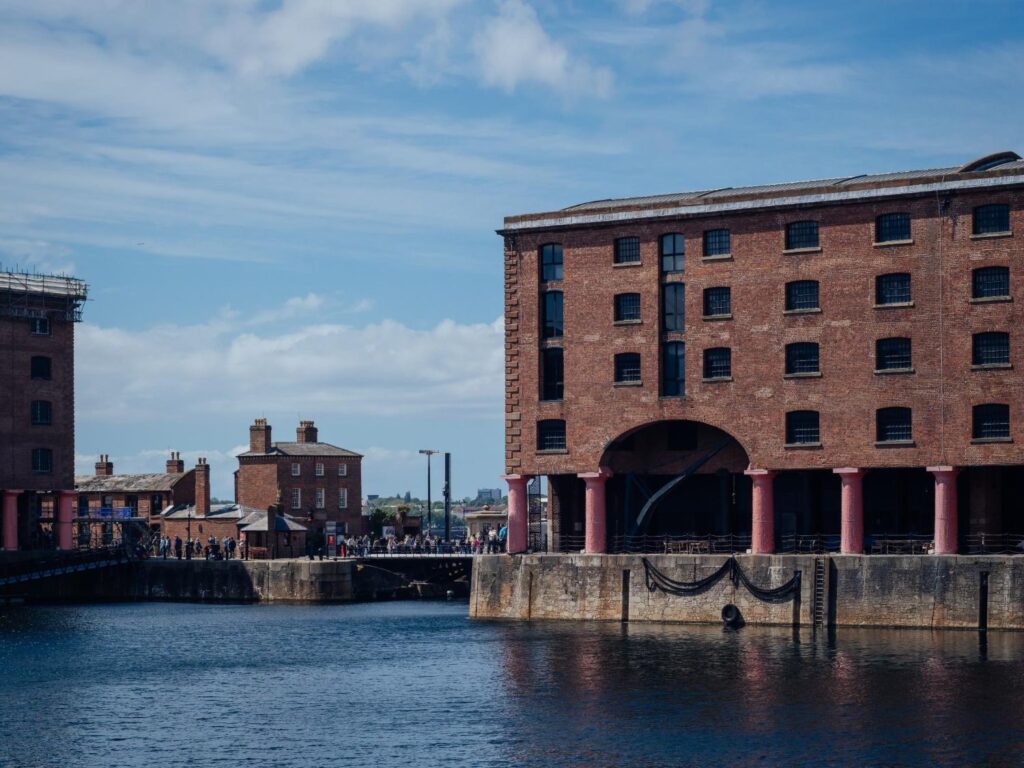
Bathroom manufacturer Duravit has supplied sanitaryware for the redevelopment of Liverpool’s iconic Royal Albert Dock, where historic warehouse buildings have been transformed into modern workspaces while retaining their industrial heritage.
Designed by Studio MUTT, the project reimagines the Grade I listed dock buildings, creating flexible office environments that sit alongside the destination’s established mix of restaurants, leisure attractions and cultural venues. Original brickwork, cast-iron columns and other industrial features have been carefully preserved, celebrating the site’s history while introducing a fresh contemporary aesthetic.
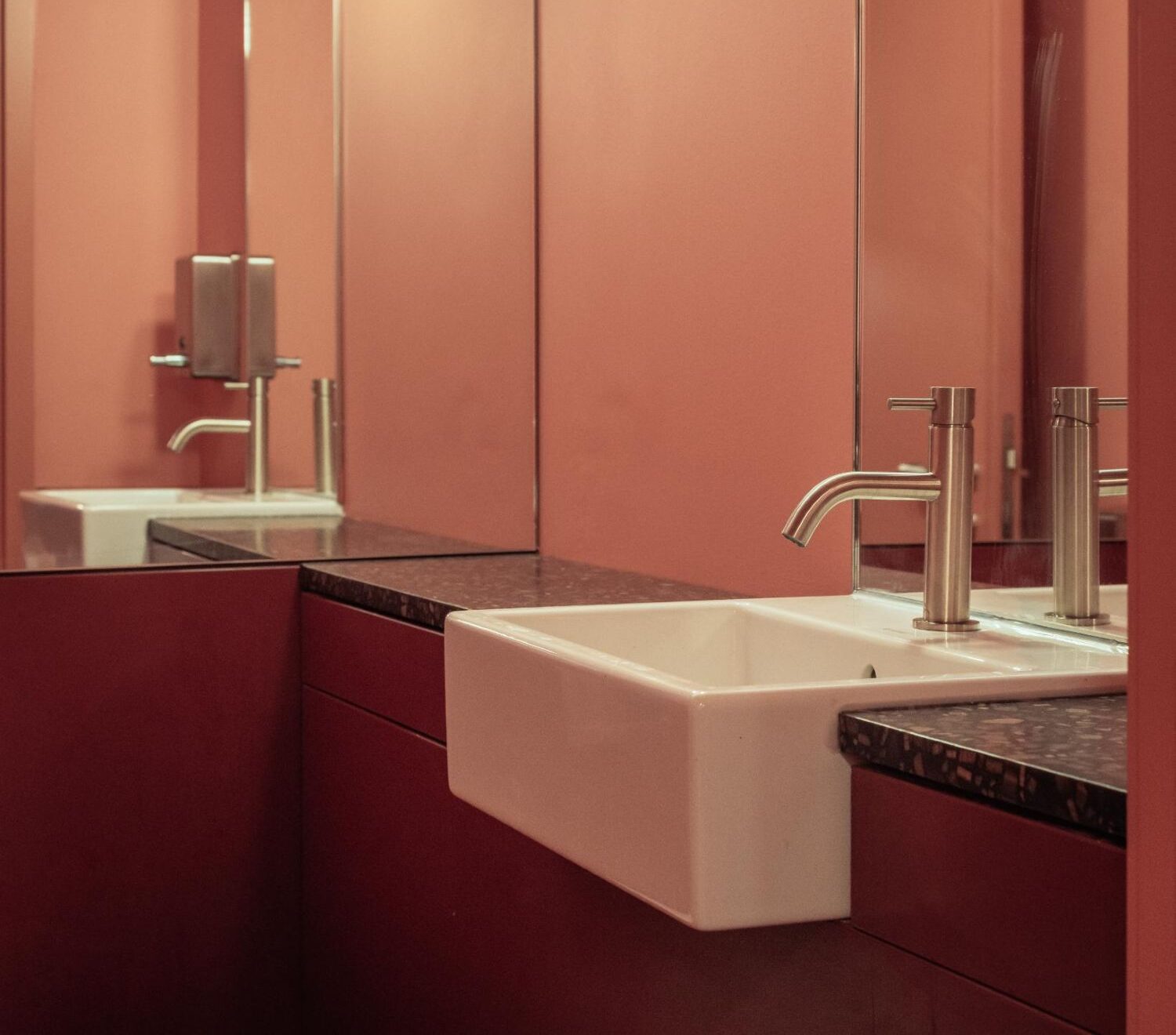
A key element of the redesign is the bathroom scheme, where Duravit’s Vero Air washbasins and ME by Starck toilets provide a calm, minimalist contrast to the bold interior palette. Clean geometric lines and softly rounded forms bring balance to spaces defined by rich terracotta, oxide red, salmon orange, basalt grey and ivory tones.
Inside the building, Studio MUTT has reorganised the interiors to create adaptable workplaces with open collaboration areas, central kitchens and communal transition spaces that encourage interaction between occupants. Colour and graphic wayfinding inspired by maritime signage provide clear navigation while referencing the dock’s historic past.
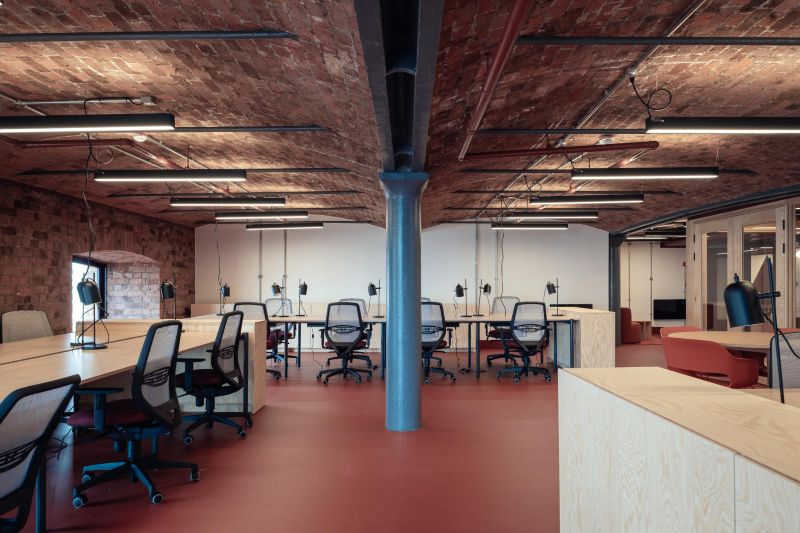
Material choices also reinforce the connection to the building’s former use, with light plywood finishes recalling traditional shipping crates and complementing the retained industrial architecture.
Within the sanitary areas, Duravit’s ceramics introduce a sense of order and refinement, ensuring the bathrooms feel calm and functional despite the vibrant surrounding colour scheme. The crisp, architectural styling of the Vero Air collection is paired with the understated curves of the ME by Starck toilets, creating a balanced design that reflects the overall vision for the redevelopment.
The project demonstrates how contemporary bathroom specification can sit comfortably within heritage architecture, supporting the transformation of one of Liverpool’s most recognisable waterfront landmarks into a modern workplace without compromising its historic character.