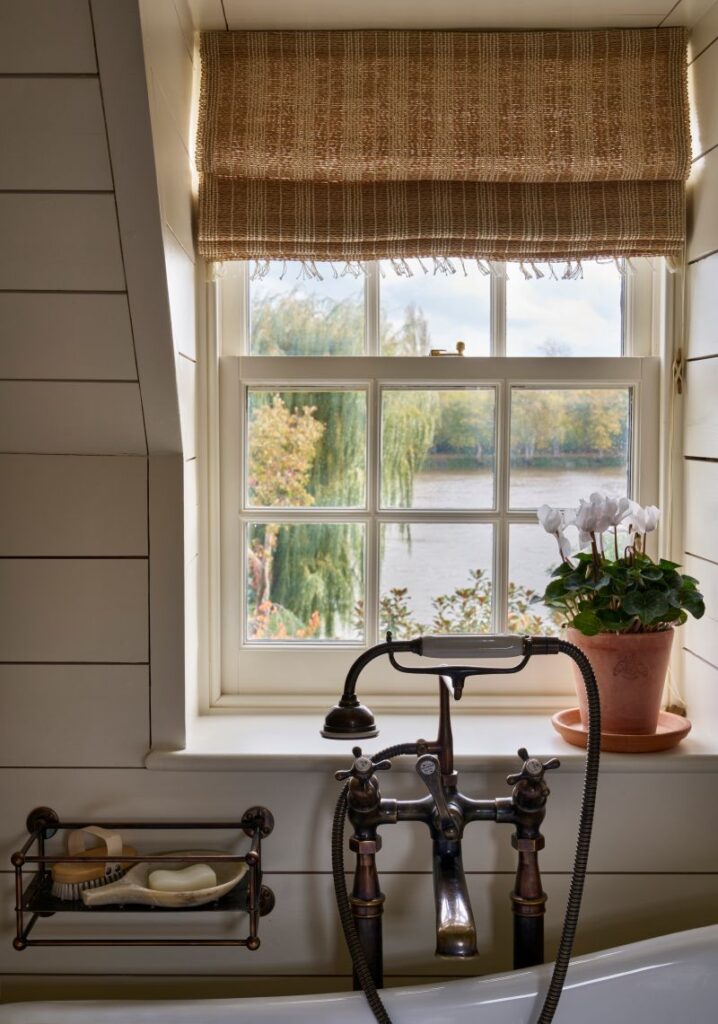
Drummonds has been specified throughout a considered bathroom renovation at a Queen Anne house on a private stretch of the Thames in West London, the home of fashion designer and Wiggy Kit founder Wiggy Hindmarch.
The principal bathroom, previously charming but impractical, has been comprehensively reimagined. A roll-top bath beneath a large window had given the room its character, but with no shower, limited storage and daily routines spread across floors, the brief called for something more resolved. The result is a space that functions seamlessly without sacrificing ceremony.
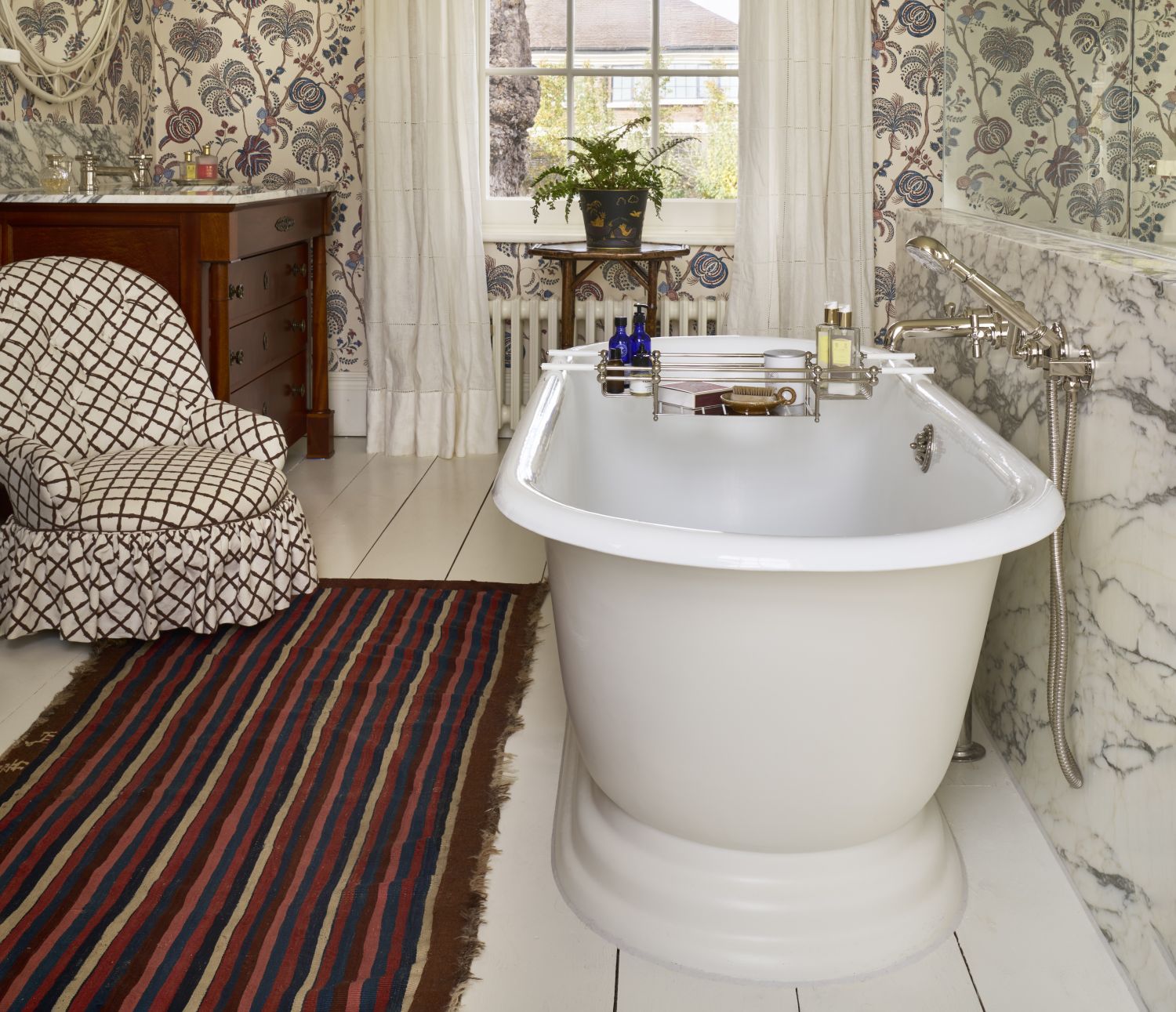
At its centre, a marble-clad walk-in shower forms an architectural pivot, open on both sides and positioned to draw the eye across the full width of the room. Beyond it, a freestanding Meon bath from Drummonds sits before the original fireplace, reinstating the sense of occasion the layout once had. Bespoke commodes on either side serve as vanities, reinforcing Hindmarch’s instinct to treat the bathroom as a furnished room rather than a purely functional one. The WC is discreetly repositioned and recedes from view.
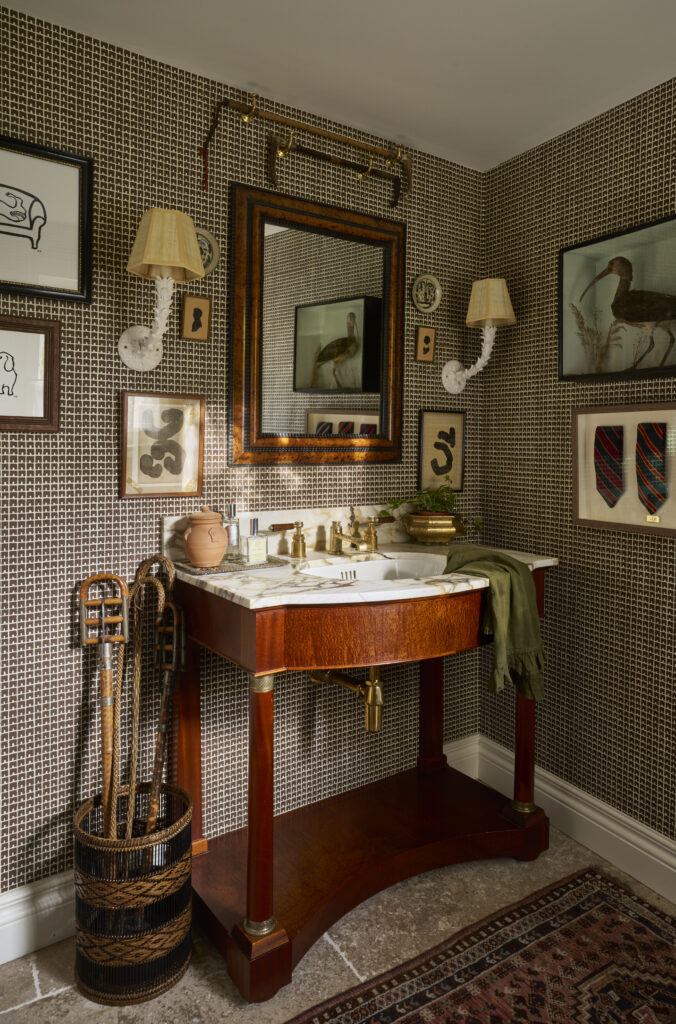
Drummonds fittings were chosen for their material integrity and classical language – solid brass construction and traditional casting methods that sit naturally within the house’s period bones. “They are the crème de la crème,” Hindmarch says simply.
The decorative scheme layers hand-painted wallpaper by Martyn Lawrence Bullard against book-matched marble, while walls are papered rather than tiled, rugs soften the floor underfoot, and lighting is kept deliberately domestic. Existing shutters are dressed with ladder-stitched linen, an upholstered chair, antique rug and birdcage lantern completing the effect.
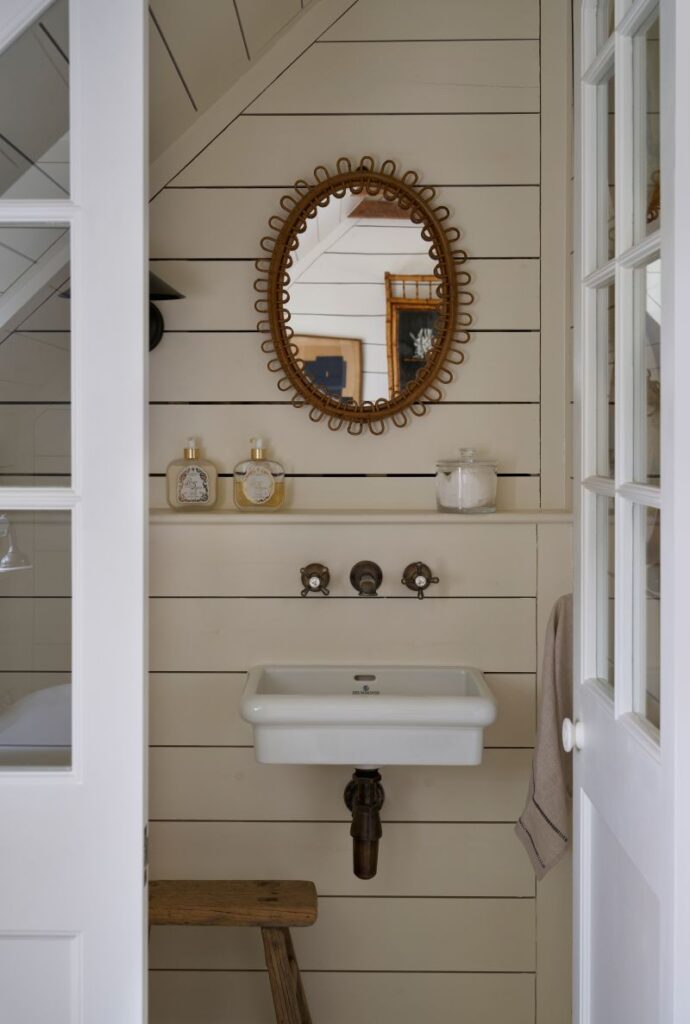
Elsewhere, a compact cabin bathroom makes inventive use of a smaller footprint with a neat tub and cleverly concealed sanitaryware. In the powder room, unlacquered Drummonds brass fittings have been left entirely untreated, allowed to age and patina in place. “I like seeing the age,” Hindmarch explains. “The watermarks, the tarnish – that’s the beauty.”
It is a project that reflects a broader philosophy: bathrooms shaped not by trend, but by instinct, craft, and an understanding of how people inhabit the spaces around them.