
It turns out that even at 17,500 mph, the one thing you really do not want to leave behind is a working bathroom. NASA’s Artemis II mission – humanity’s first crewed lunar trip in over fifty years – nearly had its launch delayed not by rocket science, but by a fault in the spacecraft’s toilet.
In the hours before the crew left Earth, sensors in the Orion spacecraft’s waste-management system threw up unexpected readings. With launch rapidly approaching, astronaut Christina Koch reportedly rolled up her sleeves and dismantled part of the toilet unit herself, guided remotely by mission control. A plumber by necessity, an astronaut by trade.
However, on saturday, the toilet was still unable to dispose of its waste overboard, NASA indicated a frozen vent line may have been to blame. The four astronauts had to use collapsible plastic containers to collect urine.
NASA spent over $23 million developing the Universal Waste Management System. The unit is deisgned to handle both liquid and solid waste in zero gravity using airflow, a funnel-and-hose arrangement, and a specialised sealed seat. Restraints are also included to stop the crew floating away mid-use.
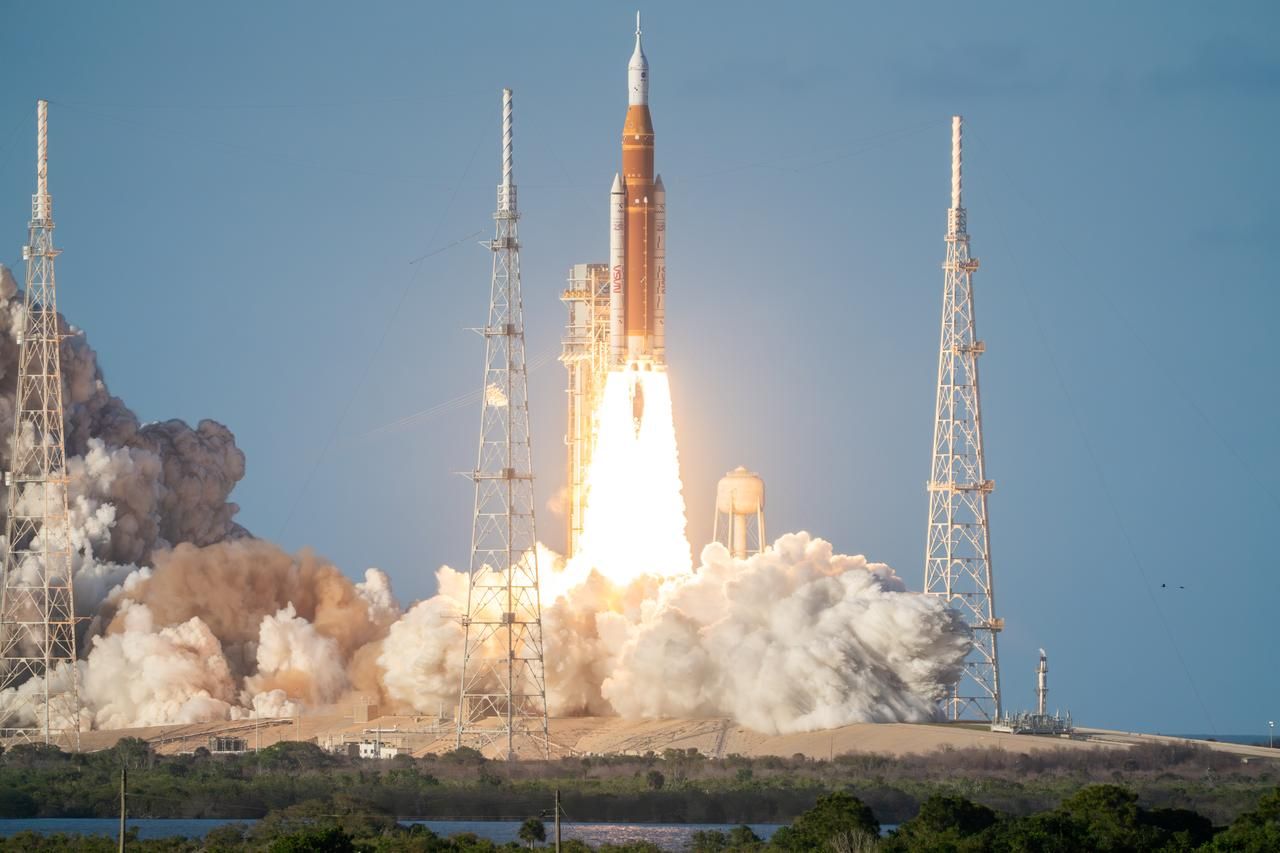
Despite its toilet troubles, Artemis II launched successfully, and is now returning to Earth after seeing parts of Moon ‘no human has ever seen’.
Facts in this piece are drawn from BBC News reporting by Esme Stallard, Tom Bennett and Grace Eliza Goodwin. Read Artemis II coverage at bbc.com/news & bbc.com/news
Photo Credit: NASA/Brandon Hancock